
THE RAPE OF PROSERPINA. PLUTO AND THE UNDERWORLD
In Book V of the Metamorphoses, Ovid recounts the abduction of Proserpina by Pluto, lord of the underworld. The young woman, busy gathering flowers, is captured and dragged into the realm of the dead. Her mother Ceres, goddess of the harvest, distraught over her loss, renders the earth barren, causing a severe famine. It is only through Jupiter’s intervention that balance is restored: Proserpina, having eaten a few pomegranate seeds that bind her to the underworld, will be able to spend part of the year on earth and part with Pluto. The myth thereby explains the changing of the seasons: when the goddess returns to her mother, nature blossoms once again; when she descends into the underworld, the earth withers and prepares for rest.
The dramatic power of this tale has been a great inspiration to artists throughout the ages. The works on exhibit powerfully convey the evocative power of Ovid’s story, defining the imagery associated with Pluto. The exhibition moves on from the classical Roman group of Hercules and Cerberus, which introduces the three-headed dog, guardian of the underworld and symbol of the boundary between life and death, to the sarcophagus depicting scenes from the myth, and the painting by Agostino Carracci (1557–1602) portraying Pluto. The itinerary continues with Orpheus and Eurydice by Rubens (1577–1640), which depicts the two lovers as they make their way through the darkness of Tartarus ‘through silent stillness’.
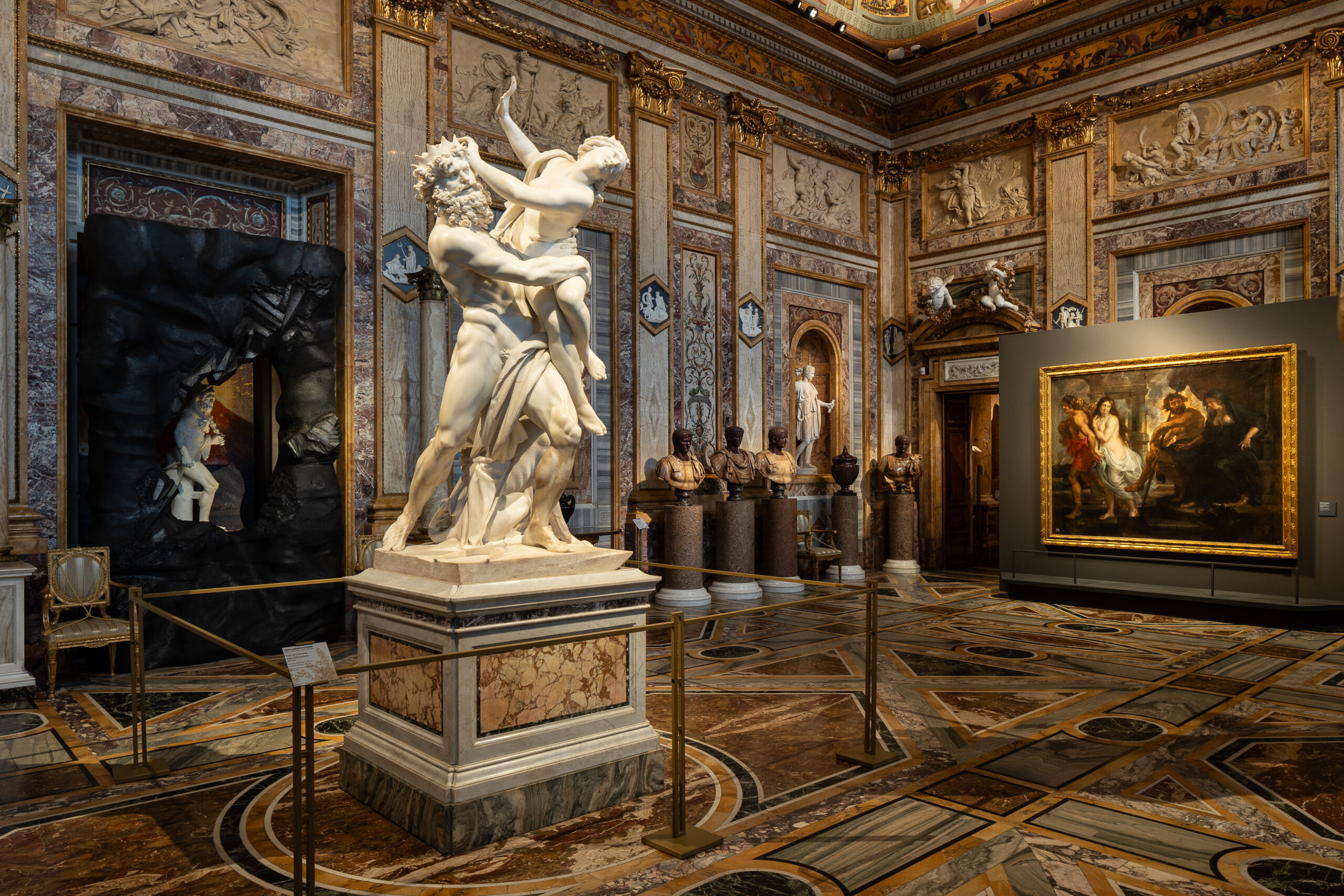
At the centre of the section is the Galleria Borghese’s masterpiece: the Rape of Proserpina by Bernini (1598–1680). There is extraordinary intensity in the rendering of this scene: Pluto’s fingers sinking into the young woman’s flesh, the terror on Proserpina’s face, and the whirling movement of the bodies, bring the frenzied verses of the poet’s account of the abduction to life through the material quality of the sculpture.