
Conferences
The Borghese Gallery's scientific meetings lectures and study days.
The Greatness of Guido Reni – Raffaella Morselli
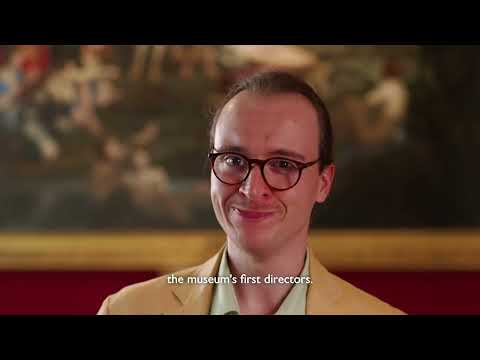
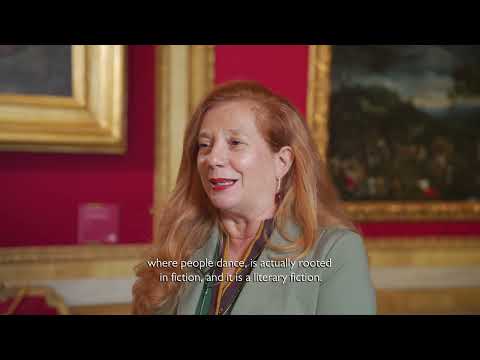
Professor Raffaella Morselli tells us that at Galleria Borghese two works coexist which, better than many great undertakings, convey the complexity and grandeur of Guido Reni. Two paintings different in subject, iconography, and purpose, yet united by the same intellectual tension: the ability to interpret one’s own time without ever fully adhering to a single poetics. Already celebrated by his contemporaries simply as “Guido,” a universal and instantly recognizable painter, the Bolognese artist moves through Rome without allowing himself to be dominated by its creativity. He is not a revolutionary like Caravaggio, nor an orthodox classicist: he is an artist who experiments, who brings reality into dialogue with antiquity, painting with poetry and music. The son of an important musician of the chapel of San Petronio, Guido grows up immersed in a refined culture that would forever shape his way of thinking and working. Twenty years later, the tone changes radically “Moses Breaking the Tablets of the Law”, probably commissioned by Scipione Borghese, is an image of warning and authority. A powerful figure, crossed by a red cloak that seems to burst through the space of the painting, gazes with fury upon the idolatrous people. Here Guido engages with classicism and naturalism at once, achieving a mature and extraordinarily powerful synthesis. These two paintings, distant in time yet close in vision, trace the arc of an artist who never betrayed his own horizon. A horizon that was clear then and crystal clear to us today. The first of the two Borghese paintings, the “Peasant Dance” (c. 1601), is an extremely rare work within his oeuvre. Seemingly a springtime idyll, the painting is rooted in the popular literature of Giulio Cesare Croce: a theatrical fiction translated into images, enriched by a subtle illusionistic play, such as the famous fly painted on the surface of the canvas. Nothing is truly natural: everything is representation.