
Mondays at the Borghese: Portraits in the Gallery
September 30th
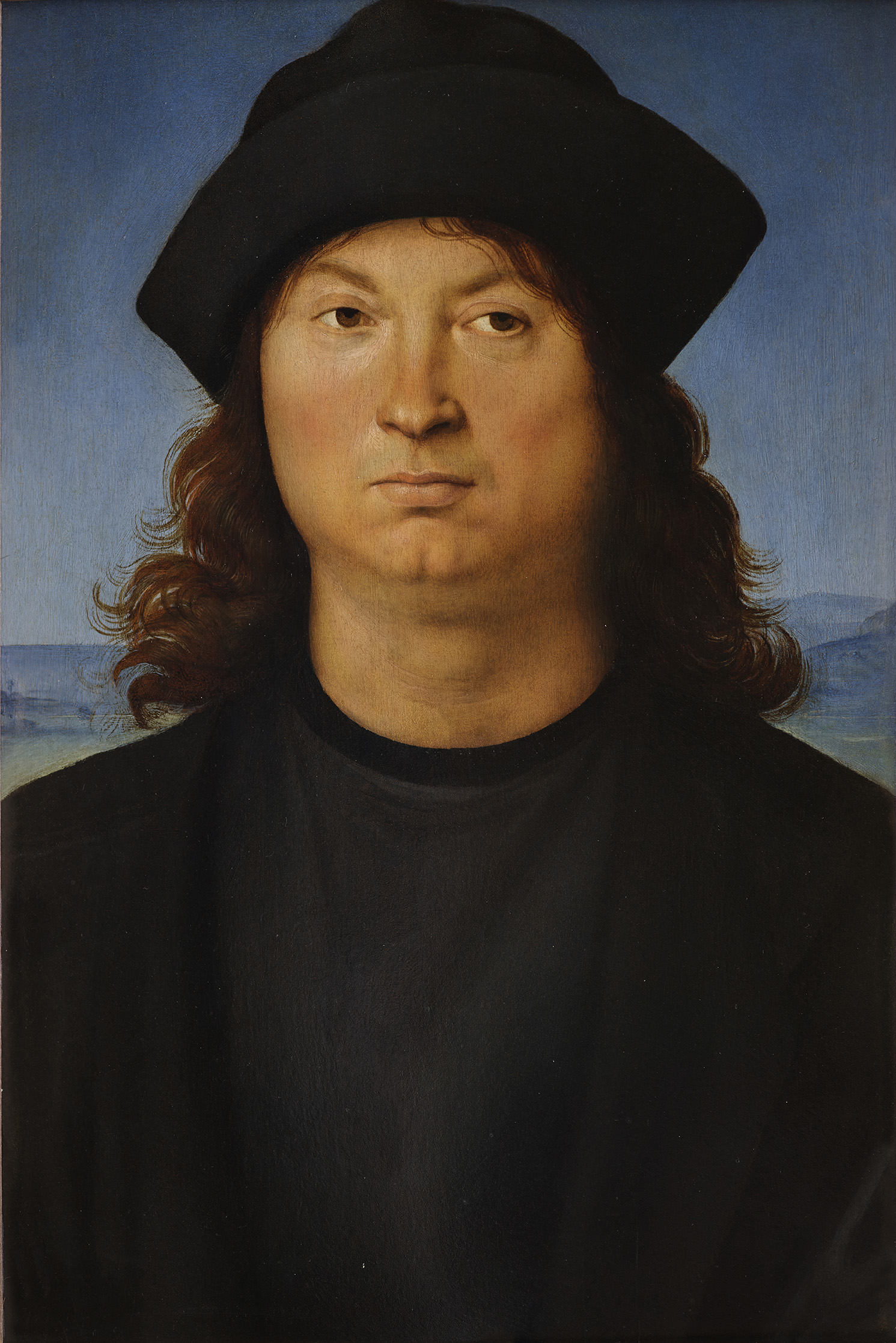
The program opens with the mysterious Portrait of a Man by Raphael (1483–1520), an early work dating to 1502–1504, painted between his Perugian and Florentine periods. The tour continues with two refined portraits by the Mannerist painter Jacopino del Conte (c. 1515–1598): the first depicts Cardinal Marcello Cervini degli Spannocchi (1501–1555), who became Pope Marcellus II for only 21 days; the second portrays the noblewoman Francesca di Bosio Sforza of Santa Fiora, recently identified through comparison with a replica preserved in the family palace in Rome.
In the same room are two additional female portraits: one possibly depicting Sofonisba Anguissola, the celebrated painter from Cremona, likely executed by her sister Lucia (post 1535–1565), and another showing a self-portrait—probably after the original in the Louvre—of Marietta Tintoretto (1554/60–1590), the beloved daughter of Jacopo Tintoretto.
The tour continues with the paired portraits of the noble Sacchetti brothers, Giulio and Marcello, painted by the great Baroque artist Pietro da Cortona (1597–1669), their protégé. The portrait of Cardinal Giulio was donated to the Gallery in 2016 by the Fondazione Giulio e Giovanna Sacchetti. Closely connected to the Sacchetti family—and especially to the Barberini—is Monsignor Clemente Merlini, portrayed at his desk by Andrea Sacchi (1599–1661), who drew inspiration from the works of Caravaggio.
The pictorial section concludes with two canvases by Gaspare Landi (1756–1830), dated 1806: a self-portrait and a portrait of his friend, the sculptor Antonio Canova, both executed with remarkable naturalness.
As for sculptural portraits, the two male busts in the Gallery represent the Flemish philosopher Justus Lipsius, sculpted by Flaminio Vacca (c. 1538–1605)—also portrayed in Rubens’s The Four Philosophers (1611–1612, Florence, Palatine Gallery)—and Cardinal Domenico Ginnasi, by Giuliano Finelli (1602–1653), considered one of the finest works of the period. These are joined by a female bust recently attributed to Lorenzo Ottoni (1648–1736), previously identified as a portrait of Felice Zacchia Rondinini by Domenico Guidi (1625–1701), but now believed to represent the Roman widow Vincenza Danesi.
The tour, titled Portraits in the Gallery: Illustrious Figures of the Galleria Borghese, is dedicated to exploring the men—and, more rarely, the women—represented in the museum’s collections. The two great collectors, Pope Paul V and Cardinal Scipione Borghese—commemorated in a painting by Ludovico Leoni, known as Padovanino (1542–1612), a copy after Caravaggio (1571–1610), and in two busts by Gian Lorenzo Bernini (1598–1680)—remain in the background, allowing focus on the other “illustrious” figures in the Gallery.