

THE MYTH OF PERSEUS. FREEING THE MAIDEN AND TURNING THE ENEMY INTO STONE
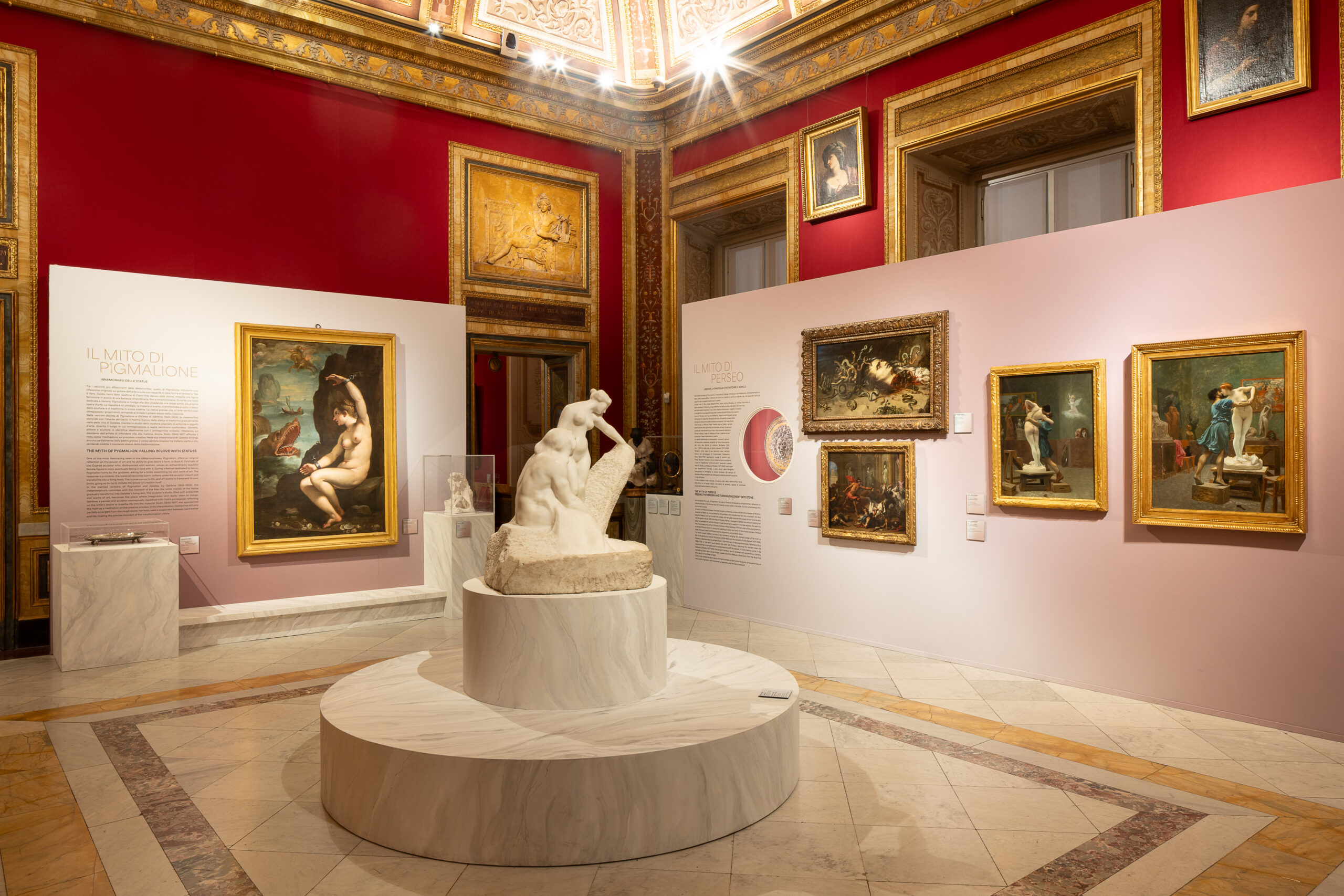
Set alongside the myth of Pygmalion, the tale of Perseus introduces a complementary re ection on metamorphosis: in the former tale, the material comes to life. In the latter, it is the human beings who are turned to stone.
In Book IV of Metamorphoses, Ovid tells the story of Medusa, once a maiden and priestess of Minerva, seduced by Neptune and punished by the goddess who transformed her into a monster: her face became hideous, her hair turned into snakes, and her gaze acquired the power to turn anyone who met her gaze to stone. With the help of Minerva, Perseus manages to defeat her without meeting her gaze. He beheads her, and the Gorgon’s head becomes his weapon in his later exploits. He uses it to free Andromeda and confront Phineus, brother of King Cepheus. A former suitor of the young woman, an armed Phineus bursts in during the wedding to claim her hand. At the crucial moment, Perseus raises Medusa’s head and Phineus and his companions are turned to stone.
The works visually capture the story’s key moments, bringing the dramatic power of the myth to life. In the painting by Antonio Tempesta (c.1555–1630) and the canvas by Rutilio Manetti (1571–1639), Perseus is depicted atop his winged steed in the heroic act of rescuing Andromeda; Sebastiano Ricci (1659–1734), on the other hand, depicts the clash with Phineus, capturing the moment when the metamorphosis is complete and the bodies become stiff ‘like statues’, in Ovid’s famous words. In the Medusa by Rubens (1577–1640) the Gorgon’s severed face is rendered with extraordinary intensity, translating Ovid’s vision into an image: snakes ooze from Medusa’s blood, born from the drops that fell to earth during Perseus’ fight.
Ovid’s myth reveals the dual nature of metamorphosis: a destructive force and, at the same time, an instrument of salvation with the power to inexorably alter the fate of mankind.